
What to Know Before Moving from Michigan to the Twin Cities
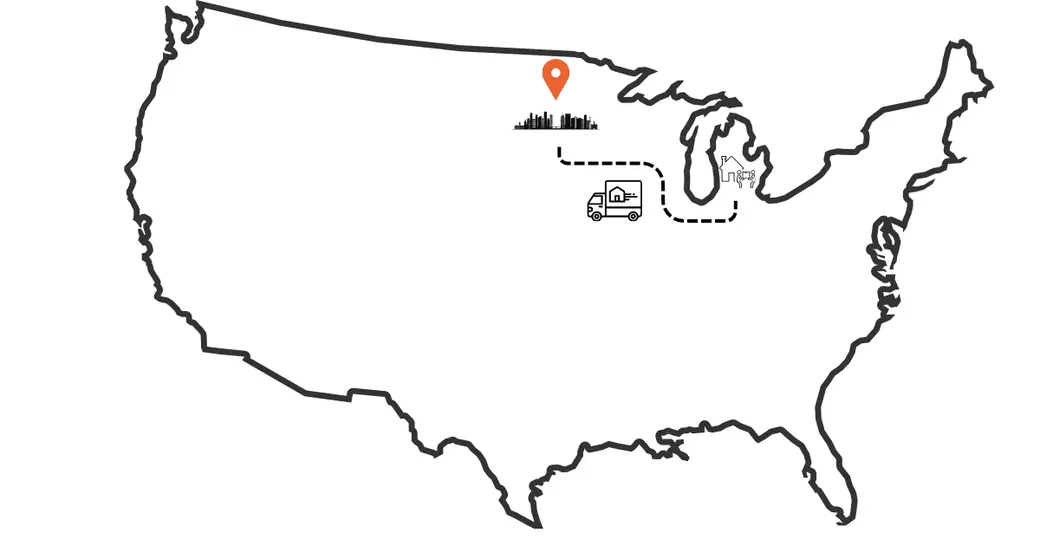
If you're coming from Detroit, Grand Rapids, Lansing, or Ann Arbor, you're not walking into unfamiliar territory. Cold winters, lake culture, and Midwest values are things you already understand. What surprises most Michigan transplants isn't the adjustment itself, it's how quickly the Twin Cities start to feel like home.
Why Michiganders Are Choosing Minnesota
The reasons tend to repeat themselves. A job opportunity that doesn't exist back home. A metro area with more depth and variety than what they're leaving. A housing market that feels more predictable to build equity in.
Michigan has plenty going for it, but parts of the state have struggled with slow economic growth for years, and the Detroit housing market in particular has had a rocky, unpredictable run. For people working in healthcare, finance, food and agriculture, or tech, Minnesota's job market often opens doors that felt closed in Michigan.
The Twin Cities also offer something Detroit and Grand Rapids are still working toward: an established, diversified metro with real neighborhood variety and a steady stream of employers across industries. And if lake life is part of your identity, you'll find no shortage of it here. Minnesota's lakes are just as central to daily life as Michigan's, arguably more woven into the urban experience.
One more factor that comes up often: Minneapolis has one of the most visible and established LGBTQ+ communities in the Midwest. For a lot of people relocating, that's not a footnote, it's a deciding factor.
Comparing Costs
Michigan's cost of living varies wildly depending on where you're starting from, so the comparison isn't one-size-fits-all.
If you're leaving the Detroit suburbs or Grand Rapids, expect the Twin Cities to run a bit higher. Median home prices here typically land in the $350,000 to $400,000 range, compared to $280,000 to $380,000 around Detroit's suburbs and $280,000 to $370,000 in Grand Rapids. Lansing tends to be the most affordable comparison point, often $210,000 to $280,000.
If you're coming from Ann Arbor, the math flips. Ann Arbor home prices often run $380,000 to $500,000, meaning plenty of buyers actually find the Twin Cities more affordable, not less.
Rent follows a similar pattern. A one-bedroom in the Twin Cities generally runs $1,200 to $1,800 a month. Detroit-area rentals often come in lower, $900 to $1,500, while Ann Arbor rents sit close to what you'd pay here.
The bigger difference isn't the price tag, it's stability. Detroit's housing market has swung hard in both directions over the years. The Twin Cities market has a longer track record of steady, consistent appreciation, which matters if you're thinking long term about building equity rather than just finding a place to live.
Winter Won't Surprise You Much
Of everything on this list, weather is probably the smallest adjustment you'll face. You already know how to dress for a Midwest winter and what it means to make it through one.
A few real differences worth knowing. Minnesota winters run slightly colder than Michigan's Lower Peninsula, with drier air and longer cold stretches. If you're from the Upper Peninsula, you'll likely find Twin Cities winters mild by comparison. Michigan tends to get more lake-effect snow dumped in bursts, while Minnesota's snowfall is generally steadier and more predictable. Summers here run a touch less humid than what you're used to in Michigan.
What you'll notice quickly is that this city doesn't slow down for winter. Roads get cleared fast, people stay active outdoors, and life continues at full speed regardless of the forecast.
Matching Your Michigan City to a Twin Cities Neighborhood
Where you're moving from tends to point toward where you'll feel most at home here.
Coming from Detroit or its suburbs, you'll likely gravitate toward areas with that same blend of industrial history and ongoing revitalization. Northeast Minneapolis, the North Loop, and St. Paul's Hamline-Midway area share that character. If you're looking for a suburban feel closer to what Oakland County offered, Bloomington, Burnsville, and Richfield are worth a look.
If Ann Arbor is home, walkability and food culture near a university are probably non-negotiables. Southwest Minneapolis, Stadium Village, and Prospect Park near the University of Minnesota check those boxes.
Grand Rapids transplants tend to feel a pull toward Northeast Minneapolis and South St. Paul, both known for strong local beer culture and a growing arts scene with a similarly tight-knit community feel. Plymouth and Maple Grove offer a comparable suburban experience if that's more your speed.
And if you're ready for something entirely different from anything near Detroit, Grand Rapids, or Ann Arbor, Edina, Wayzata, and Stillwater bring an upscale suburban or small-town character that Michigan's major metros don't really have an equivalent to.
What Changes Once You're Settled
Most Michigan transplants say the same thing after a year here: the sheer range of things to do caught them off guard. More restaurants, more neighborhoods worth exploring, more employers to choose from, more happening on any given weekend, and it's spread across the whole metro rather than concentrated in one or two pockets.
There's also a genuine sense of pride in how people here treat their city. It shows up in how the parks are maintained, how neighborhoods organize around local events, and how seriously people take their sports teams even in years they don't deserve it.
Ready to Start Planning Your Move
If a move to the Twin Cities is starting to feel real, the best next step is talking to someone who knows these neighborhoods well enough to match you with the right one, not just the popular one. Reach out and let's figure out where you'll actually feel at home.
Categories
Recent Posts




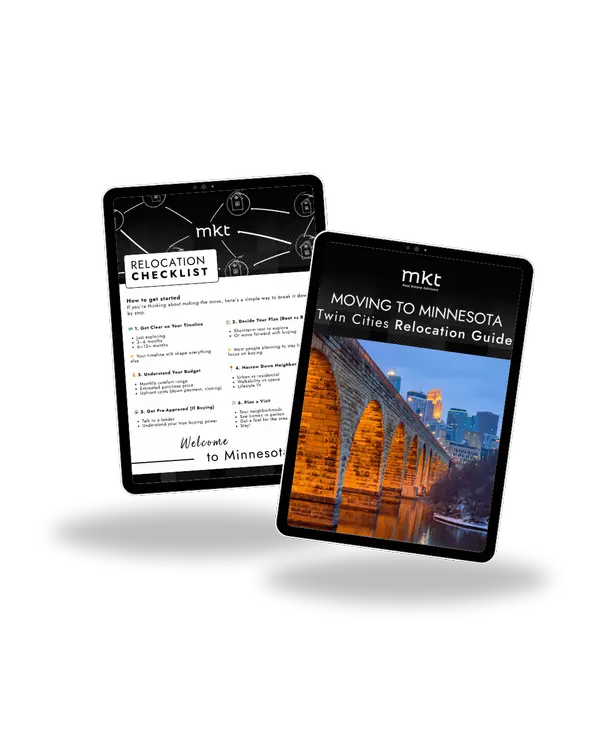
THINKING ABOUT MOVING TO MINNESOTA?
Get our free guide covering cost of living, neighborhoods, and everything else you need to know before making the move.