

Moving from California to Minnesota: What to Expect
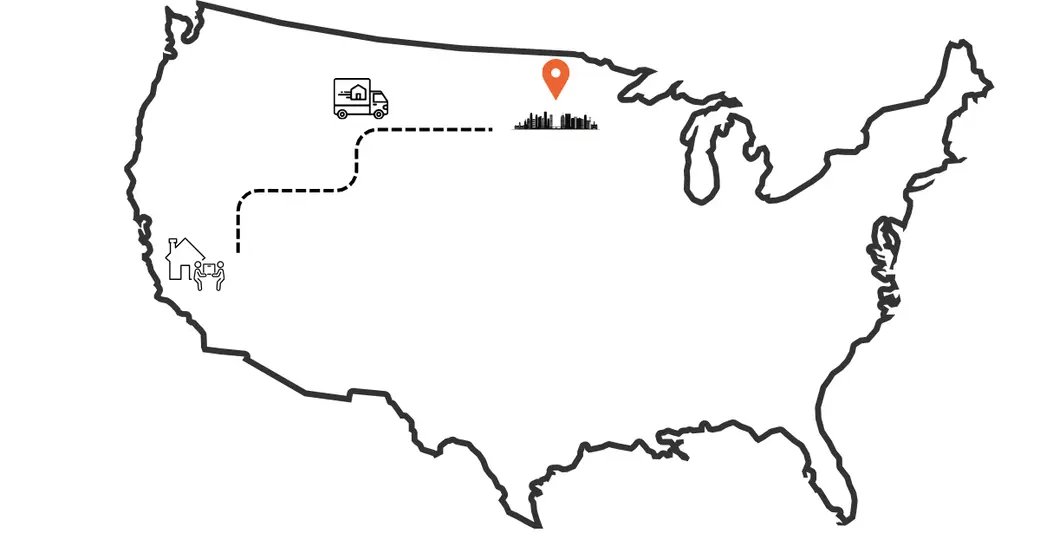
California has been steadily losing residents for years, and a good number of them are landing in the Twin Cities. Bay Area, Los Angeles, San Diego, Sacramento, the origin city changes, but the reasons behind the move rarely do.
Why Californians Are Choosing Minnesota
Living in California's major metros has gotten expensive enough that building real financial stability feels out of reach for a lot of people. Home prices are extreme. Taxes sit near the top of the country. Even routine costs like groceries and dining add up faster than the lifestyle justifies.
Minnesota isn't trying to compete with California's weather or its coastline. What it offers instead is something plenty of transplants have been chasing for years without luck: an actual path to owning a home, more room in a monthly budget, and a quality of life that doesn't demand every dollar you earn just to sustain it.
The specific reason varies by person, but financial pressure shows up in almost every story.
Housing costs. Median home prices in the Bay Area and Los Angeles often run two to three times higher than the Twin Cities. For people who've been renting indefinitely because buying never felt realistic, Minnesota changes that math.
Overall cost of living. Groceries, dining, and everyday services cost noticeably more in California. At most income levels, a paycheck simply stretches further here.
Remote work flexibility. A large share of California transplants work remotely and no longer need to justify living in a high-cost coastal market. Once location stops being tied to an office, the financial case for staying in California weakens fast.
A lifestyle reset. Plenty of Californians are working hard just to afford a life that still feels stressful. The Twin Cities offer a comparable urban experience, real food culture, strong neighborhoods, genuine energy, at a fraction of what it costs on the coast.
Cultural fit. Minnesota consistently ranks among the more progressive states in the country. For Californians worried about finding a community that aligns with their values outside the coasts, the Twin Cities are a legitimate option worth considering.
Comparing the Numbers
Home prices
Home prices vary a lot depending on which California market you're leaving.
The Twin Cities median sits around $350,000 to $400,000. Compare that to the San Francisco Bay Area, where prices often run $900,000 to $1.3 million or more, Los Angeles at $700,000 to $1 million-plus, San Diego between $750,000 and $950,000, and Sacramento at a somewhat more moderate $450,000 to $600,000.
Rent
A one-bedroom in the Twin Cities typically runs $1,200 to $1,800 a month. In San Francisco, expect $2,800 to $3,800. Los Angeles rentals often land between $2,200 and $3,200. Sacramento, the most affordable California comparison here, still runs $1,500 to $2,100.
Renting versus buying
Most people relocating to Minnesota aren't planning to rent indefinitely, the goal is to get settled and buy. Rent first if you need flexibility while you learn the area. Buy once you know you're staying.
Whichever California market you're coming from, the gap is significant. For a lot of California renters, this move is the first real chance they've had to buy a home in years, sometimes ever.
Taxes
Both states tax income. California's rates rank among the highest in the country. Minnesota's are still meaningful, but noticeably lower than California's top brackets for most earners.
On property taxes, California's Proposition 13 helps long-term owners keep their bills down, but new buyers get assessed at the purchase price regardless. Minnesota's effective property tax rates run moderate and fairly predictable year to year.
Between lower rent and lower everyday costs, a lot of California transplants find they've saved more in their first year in Minnesota than they did in their entire time on the coast.
The Weather, Honestly
There's no version of this that claims Minnesota's winters beat California's climate. They don't. California has some of the best weather in the world, and that's part of why it costs what it does.
Minnesota winters are genuinely cold. Coming from Southern California especially, a January here will feel like a different planet at first.
What you're giving up: mild winters, year-round outdoor comfort, no real cold season, beach access, and the Pacific.
What you're getting instead: four distinct seasons that actually feel different from each other, summers you can spend outside without needing air conditioning most days, a city that keeps functioning through winter instead of shutting down, and snow that a surprising number of California transplants end up genuinely enjoying.
The most common thing we hear after the first year: winter is hard at first, but people acclimate faster than expected. And spring here, after a real winter, hits differently than it does anywhere temperate year-round.
Where Californians Tend to Settle
Bay Area transplants often gravitate toward neighborhoods with walkability, independent coffee shops, and a strong food scene, think Northeast Minneapolis, the North Loop, Lowry Hill, and Mac-Groveland over in St. Paul. These areas carry the same energy Bay Area residents are used to, just at a dramatically different price point.
Los Angeles transplants tend to prefer more space and a slightly more suburban feel, areas like Linden Hills, Kenwood, Edina, or the inner-ring suburbs fit that well. Still close to the city core, but with more room to breathe.
Remote workers often land somewhere with a solid home office setup and easy access to nature, places like Stillwater, White Bear Lake, and the area around Lake Minnetonka are popular choices.
For people optimizing purely for value, Roseville, Burnsville, and Brooklyn Center offer solid housing at some of the most affordable price points in the metro.
What Surprises Most Transplants
People coming from California are often caught off guard by how much culture the Twin Cities actually has. The food scene holds its own, multiple James Beard nominations, a genuinely diverse restaurant landscape, and a local food culture that takes quality seriously. The arts and theater scene ranks among the strongest in the country per capita. The LGBTQ+ community here is visible, organized, and active. Craft beer and coffee culture are both very real.
This isn't a cultural downgrade. It's a city that punches well above its weight, at a cost of living that actually feels sustainable.
Ready to Start Planning Your Move
If a move from California to Minnesota is starting to feel real, the best next step is talking to someone who knows these neighborhoods well enough to match you with the right one, not just the popular one. Reach out and let's map out a plan.
Categories
Recent Posts




THINKING ABOUT MOVING TO MINNESOTA?
Get our free guide covering cost of living, neighborhoods, and everything else you need to know before making the move.